
When Do Transmission Additives Really Help
Interest in additives usually appears only after the first worrying symptoms: the transmission starts shifting with delays, jolts or vibrations appear, unusual noise shows up, or operating temperature rises. At this point, many people hope to find a product that will quickly fix the problem and help avoid an expensive repair.
However, this approach rarely matches how modern protective additives actually work. Their main job isn't to restore damaged parts, but to create more favourable conditions for components that are still in good working order. That's exactly why they can deliver the most benefit not after serious faults appear, but well before that.
An additive doesn't restore worn parts. It reduces the intensity of natural wear in components that are still healthy, which is why it's most effective to use it in advance, rather than after serious symptoms appear.
Wear begins from the very first kilometres
Every transmission starts wearing from day one of use. This is a completely natural process. Even with ideal lubrication, friction still occurs between components: gears mesh together, bearings absorb load, friction packs engage during gear shifts, and the hydraulic system continuously maintains the necessary pressure.
Modern transmission fluids significantly reduce the rate of wear, but eliminating it entirely is impossible. This is exactly why engineers pay enormous attention to oil quality and its protective properties.
Why prevention beats repair
Many people see additives as a way to fix faults that already exist. In practice, the most logical moment to use them is while the transmission is still fully functional. As long as component surfaces retain their original geometry and clearances stay within design tolerances, modern anti-wear components can work most effectively.
Their job isn't to repair the transmission, but to reduce the rate of natural wear and preserve the performance characteristics of the transmission fluid over time. This is exactly why a preventive approach looks far more sound than trying to restore a unit that has already suffered serious mechanical damage.
Why an additive can't replace a repair
You'll sometimes come across the claim that a good-quality additive can restore virtually any transmission. This claim can't be considered technically correct. If friction discs are worn, bearings are damaged, gear teeth are chipped, or elements of the hydraulic or electronic control system have failed, no additive can restore missing material or replace a faulty part.
The chemical composition of a transmission fluid can influence friction, lubrication, and surface protection, but it cannot undo mechanical damage. So expecting a result from an additive comparable to a major overhaul is not realistic.
When an additive can genuinely help
Modern transmission additives can be useful if the transmission is in good or moderately worn condition, and the issue relates not to damaged parts but to the conditions they operate under. Depending on their formulation, such products can:
- improve the lubricating properties of the transmission fluid;
- strengthen protection of friction surfaces;
- reduce the rate of wear;
- increase oil film stability under high loads;
- help the hydraulic system run more consistently;
- reduce noise caused by natural wear;
- help maintain stable fluid characteristics over time.
The specific outcome always depends on the transmission's design, its technical condition, and the composition of the additive itself.
Do additives work the same way across different transmission types
No, and this is one of the most common misconceptions. Different transmission designs operate on different principles, so requirements for the fluid and compatible additives differ too. That's exactly why, before using any additive, you need to make sure it's designed for the specific type of transmission.
Automatic transmission (AT)
In a classic automatic transmission, the fluid performs several functions at once. It doesn't just lubricate components, it also transmits hydraulic pressure, cools transmission elements, enables the valve body to work, and takes part in controlling gear shifts. That's why additives for automatic transmissions need to preserve the fluid's characteristics and not disrupt its frictional properties. The main job of such products is to keep the transmission fluid working consistently, reduce wear on friction surfaces, and help maintain the efficiency of the hydraulic system.
CVT (continuously variable transmission)
A CVT works on a completely different principle. Torque is transmitted through a metal belt or chain interacting with conical pulleys. A precisely calculated coefficient of friction is critical here: too little friction can cause the belt or chain to slip, while too much increases loads and accelerates wear. That's exactly why, for CVTs, only additives explicitly stated by the manufacturer as CVT-compatible should be used.
Dual-clutch transmission (DCT/DSG)
Dual-clutch transmissions combine a mechanical design with automated control. Depending on the design, they may use wet or dry clutches. In wet-clutch transmissions, the fluid simultaneously lubricates components and takes part in how the clutch packs function, so changes to its characteristics can affect shift quality. For these transmissions, it's especially important to use products the manufacturer explicitly states are compatible with DCT or DSG.
Manual transmission (MT)
In a manual transmission, the oil's main job is to form a strong lubricating film between gear teeth, bearings, and synchronisers. There's no complex hydraulic control system here like in automatics, so the tasks additives address are different, most often related to reducing friction, protecting against wear, and coping with high point loads.
Manual transmissions are classified under the API GL system, which defines the level of extreme-pressure (EP) additives in the oil.
| API GL class | Purpose |
|---|---|
| GL-1 | Light-duty conditions, no EP additives. Safe for yellow metal components. |
| GL-4 | Moderate loads, the standard for most manual transmissions with synchronisers. Roughly half the sulphur-phosphorus additive concentration of GL-5. |
| GL-5 | Heavy loads, the standard for hypoid gears in differentials. Higher concentration of sulphur-phosphorus additives. |
The sulphur-phosphorus EP additives found at the high concentration typical of GL-5 can chemically react with the brass and bronze that synchronisers are often made from. This can lead to accelerated damage, hard shifting, and grinding. If the transmission manufacturer specifies GL-4, you shouldn't use an ordinary GL-5 oil or additive instead, even though GL-5 technically offers a higher level of scuff protection. The exception is products the manufacturer explicitly states are compatible with both GL-4 and GL-5 and safe for yellow metals, in which case synchroniser compatibility has already been confirmed by the manufacturer.
At the same time, you need to take the transmission manufacturer's requirements into account, especially where synchronisers made of yellow metals are used, since these are sensitive to the composition of certain EP additives.
Why you can't pick an approach at random
Despite the similar names, automatic transmissions, CVTs, dual-clutch transmissions, and manual transmissions all operate on different principles. So an additive that works well for one transmission type won't necessarily suit another, unless the manufacturer explicitly states otherwise. The main rule stays the same: only use products that are either designed for a specific transmission type, or explicitly stated by the manufacturer as universal and compatible with several types, and that in any case meet the vehicle manufacturer's recommendations.
When you shouldn't expect any effect
If a transmission already has serious mechanical damage, an additive can't replace a repair. Such situations include:
- broken gear teeth;
- heavily worn friction packs;
- damaged bearings;
- valve body faults;
- solenoid failure;
- electronic faults in the control system.
In all these cases, diagnostics and fixing the root cause of the fault are required.
Common misconceptions
An additive can restore virtually any transmission.
No. An additive influences friction, lubrication, and surface protection, but it cannot restore missing material or replace a broken part.
A higher EP protection class always means a better-suited additive or oil.
No. A higher protection class (for example GL-5 instead of GL-4) can be chemically incompatible with yellow-metal synchronisers and damage them, even though it technically offers stronger scuff protection.
An additive is only worth using once symptoms have already appeared.
No. Additives are most effective in a healthy transmission, while component geometry and clearances are still intact, rather than after serious wear has already set in.
Frequently asked questions
- Can I use the same additive for an automatic and a manual transmission?
- Not always the same one: automatic and manual transmissions have different fluid requirements, so most additives are developed for a specific transmission type. That said, universal products do exist that manufacturers state are compatible with several transmission types at once, but before use you should confirm this is explicitly stated on the packaging or in the product description.
- What happens if you put a GL-5 additive into a transmission where the manufacturer requires GL-4?
- The higher concentration of sulphur-phosphorus additives in GL-5 can, over time, damage brass or bronze synchronisers, leading to hard shifting and grinding noises.
- Can an additive completely stop transmission wear?
- No, eliminating wear entirely is impossible even with ideal lubrication, since friction between components arises from the transmission's design itself. An additive can only reduce the rate of this process.
- Why do you need to check CVT compatibility for an additive used in a variator?
- In a CVT, torque is transmitted through a belt or chain and conical pulleys, which requires a precisely calculated coefficient of friction. An additive not tested by the manufacturer for CVT compatibility can upset that balance and cause slipping or accelerated wear. That said, universal products do exist that the manufacturer explicitly states are suitable for several transmission types at once, including CVTs, in which case CVT compatibility has already been verified and confirmed by the manufacturer.
Why a preventive approach looks the most rational
Picture two identical transmissions. The first is run without any additional protective components until the first serious signs of wear appear. The second uses good-quality transmission fluid from the start, has its change intervals respected, and is treated with a modern protective additive compatible with that transmission type.
If all other conditions are equal, the second scenario theoretically creates more favourable conditions for the friction surfaces, since the protective components start working before significant wear appears.
At the same time, it can't be claimed that this approach is guaranteed to extend the service life of any transmission. Its lifespan is also shaped by design, maintenance quality, driving style, temperature conditions, loads, and many other factors.
Conclusion
Modern transmission additives are not a way to restore broken parts and cannot replace a timely repair. Their main purpose is different: to help reduce the rate of natural wear, maintain favourable conditions for friction surfaces, and preserve stable transmission fluid properties. This is exactly why preventive use in a technically healthy transmission is considered the most justified approach, letting protective components work from the very start of use rather than after serious mechanical damage has already appeared.
Products related to this post
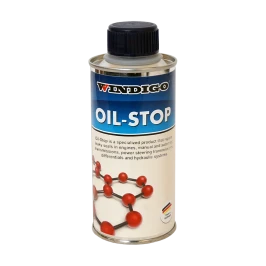
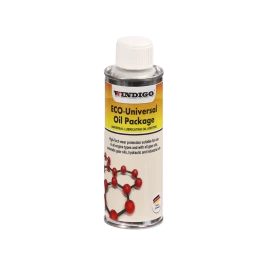
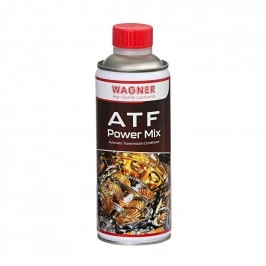
55.00€ Ex Tax: 45.45€
ADD TO CART